Tips and walkthroughs
Swapx DeFi is a Sonic DEX built around Algebra V4 liquidity and pool voting rewards
In short: Sonic blockchain DEX for low-slippage token swaps and liquidity pools, using Algebra V4 concentrated liquidity plus pool voting rewards.
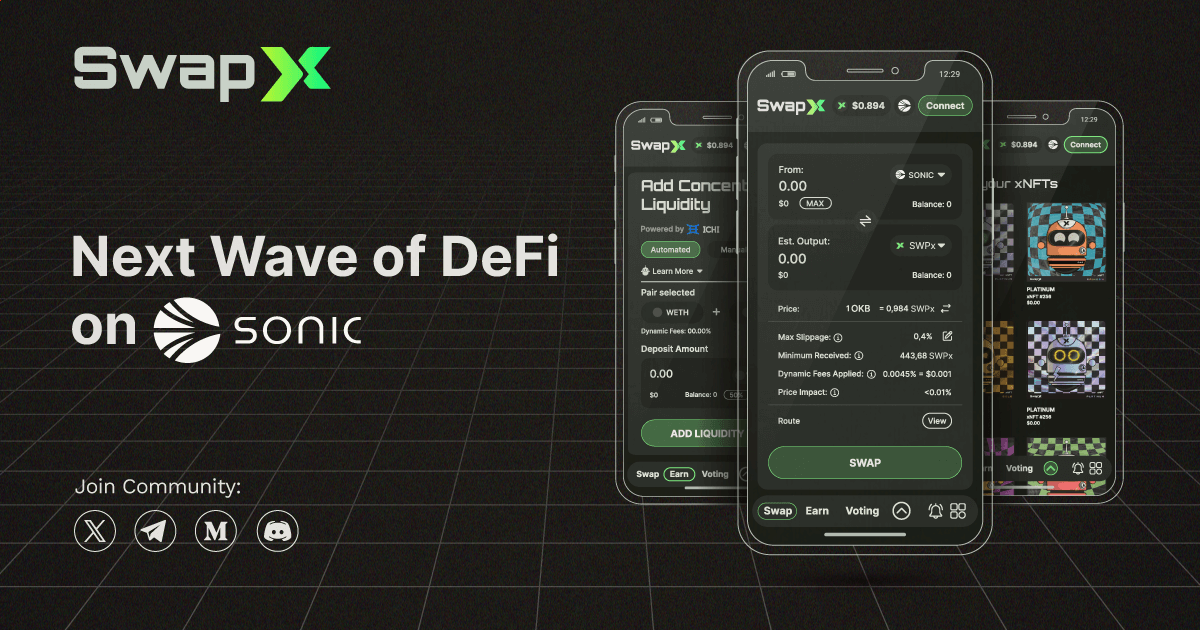
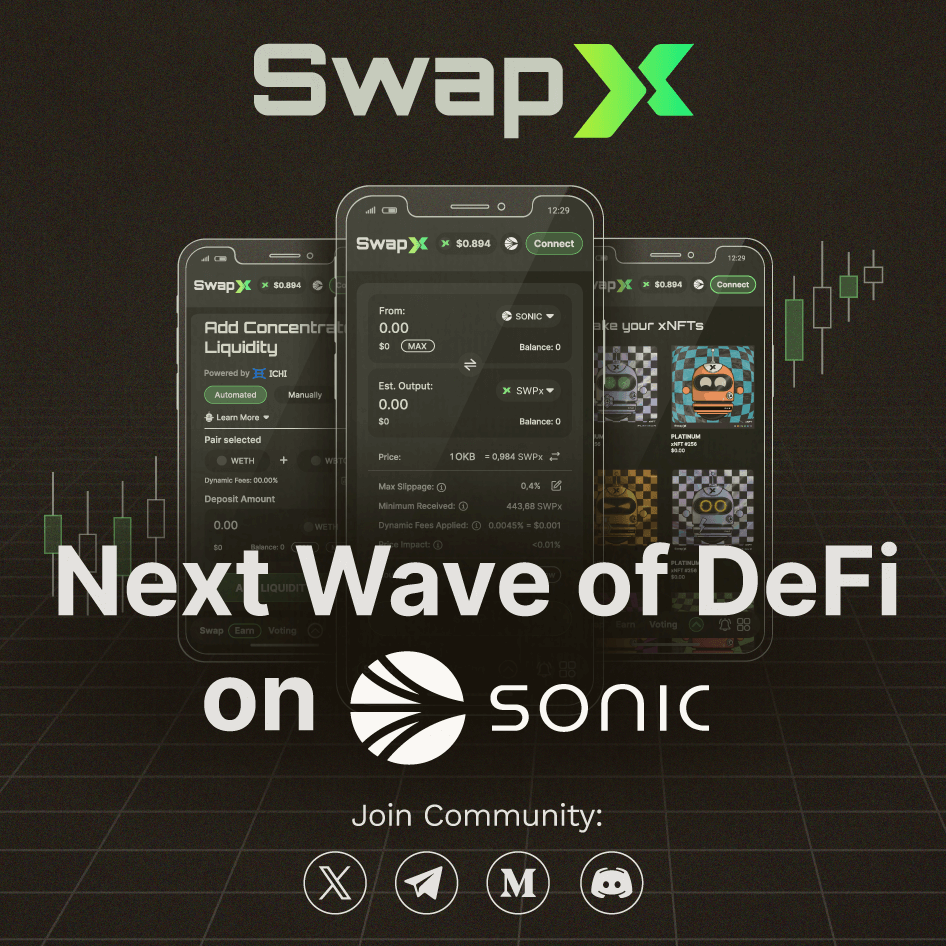
Swapx defi is a decentralized exchange on the Sonic blockchain for low-slippage token swaps, concentrated liquidity pools, automated liquidity management, and rewards tied to pool voting. It uses Algebra Finance V4 infrastructure so traders route through efficient liquidity ranges, while liquidity providers place capital into pools that support Sonic-based markets. The page is best understood as a DeFi trading and liquidity layer for users who already want self-directed on-chain execution.
Algebra V4 liquidity is the core design choice
The defining mechanism behind Swapx defi is its use of Algebra Finance V4, a concentrated liquidity framework built for automated market makers. Concentrated liquidity lets liquidity sit inside specific price ranges instead of being spread evenly across every possible price. When trading activity stays inside those ranges, the pool uses capital more efficiently and swap execution improves because more usable liquidity is available near the market price.
This matters on Sonic because fast finality and active token markets place pressure on DEX routing quality. A pool with scattered liquidity creates wider price impact for larger swaps. A pool with well-positioned liquidity gives traders a cleaner quote and gives liquidity providers a more deliberate way to take exposure to pair activity. Automated liquidity management adds another layer by reducing the amount of manual range adjustment that providers otherwise face in concentrated liquidity systems.
How low-slippage swaps move through Sonic pools
A swap begins with the trader choosing a token pair, entering an amount, and reviewing the quoted output before signing the transaction in a compatible wallet. The protocol reads available liquidity in the selected pool or route, estimates price impact, and executes the trade on-chain after approval. Swapx defi fits this workflow by focusing on Sonic assets and liquidity venues that settle directly on the network.
Low slippage does not mean every trade clears at the screen quote. It means the pool design seeks to keep execution closer to the expected price when enough liquidity sits near the trade range. Thin pools, volatile tokens, or unusually large orders still move the price. The useful habit is to compare the route, price impact, minimum received amount, and token contract before signing.
Pool voting turns liquidity preference into rewards
Pool voting is the feature that separates this from a plain swap interface. Swapx defi connects liquidity incentives to community choices about which pools deserve reward emphasis. Users who participate in voting influence where incentives flow, and pool operators compete for that attention by building deeper, more useful markets.
The mechanism aligns three groups around the same pool. Traders want tight execution, liquidity providers want fee activity and incentives, and voters want their influence to matter in the reward schedule. When that loop works, important pairs get deeper liquidity and the exchange becomes more useful for the next trade. When voting becomes concentrated around short-lived yield, rewards chase temporary volume instead of durable market depth, so pool selection still requires judgment.
Liquidity providers earn from range placement and pool demand
Providing liquidity means depositing the required token pair into a pool so other users can trade against it. In a concentrated liquidity model, the position has a price range, and earnings depend on whether trades happen while the market stays inside that range. Swapx defi presents this as a yield opportunity, but the mechanics are closer to market making than to passive interest.
The main return sources are trading fees , liquidity incentives, and voting-related rewards when a pool qualifies. The main cost is inventory movement. If one token rises or falls sharply against the other, the position rebalances into the weaker side of the pair as trades pass through the pool. That dynamic is the standard impermanent loss problem found across automated market makers, and it matters more when a provider chooses volatile pairs.
Automated liquidity management reduces range maintenance
Concentrated liquidity rewards precision, but precision creates work. Providers need ranges that match real market behavior, and those ranges go stale when prices move. Automated liquidity management exists to handle part of that operational burden by helping positions stay closer to useful trading zones.
For Swapx defi users, this feature is valuable because Sonic markets move quickly and smaller token pairs develop uneven depth. A managed position keeps capital more active than a forgotten range that sits far away from the current price. It also gives newer liquidity providers a clearer entry point into a model that otherwise requires constant chart watching, fee comparison, and manual transaction costs.
Getting from wallet connection to the first swap
The first practical step is using a wallet configured for Sonic and holding enough native gas for transaction fees. After connecting, a trader selects the input token, output token, amount, and route. The interface then requests token approval when the asset has not been approved before. Approval gives the contract permission to spend that token up to the allowed amount, and the actual swap is a separate signed transaction.
A clean first run keeps the trade small, especially with a token the wallet has not handled before. The details worth checking before confirmation are straightforward:
- the selected network is Sonic;
- the token symbols match the intended contracts;
- price impact is acceptable for the trade size;
- the minimum received amount still fits the plan;
- the wallet shows the expected approval and swap steps.
Once the transaction confirms, the output token appears in the wallet if the token is visible in the asset list. Some wallets require the user to import a token contract before the balance displays.
Where this fits among other AMM designs
Swapx defi belongs to the concentrated liquidity branch of AMM design, similar in concept to Uniswap v3-style market making. Curve is better known for stable and correlated assets, while Balancer supports weighted multi-token pools. Those products frame the broader design map: concentrated liquidity emphasizes capital efficiency near selected prices, stable-swap pools emphasize low movement between like assets, and weighted pools emphasize flexible portfolio construction.
The Sonic-specific angle is the reason to use this exchange rather than a general-purpose DEX on another network. It focuses on assets, pools, and incentives native to Sonic, so it serves users who already operate inside that ecosystem. A trader moving between chains still has to account for bridge timing, wallet network setup, and available token liquidity before reaching the swap itself.
What to watch before adding serious liquidity
The most important risk is not a single warning label; it is the combination of smart contract exposure, volatile token inventory, and reward assumptions. Algebra V4 gives the exchange a known liquidity architecture, but any DeFi position still depends on the contracts, the pool configuration, and the behavior of the tokens inside that pool.
Before putting a large position into Swapx defi, a user should understand the pair, the trading activity, the reward source, and the likely range behavior. A pool with high advertised yield and little real volume produces a different profile from a heavily traded pair with modest incentives. Rewards paid for voting or liquidity provision also change over time, so the position needs periodic review rather than one-time setup.
Why Sonic-native traders use it for execution and yield
Sonic users look for quick swaps, enough depth to move between ecosystem tokens, and liquidity programs that reward active participation. Swapx defi brings those pieces together through concentrated pools, automated management, and voting-linked incentives. The exchange is most useful when a user wants both sides of the DEX experience: trading through pools and helping decide which pools attract liquidity.
That combination gives the protocol a practical role inside Sonic DeFi. It is a place to exchange tokens, a market structure for liquidity providers, and a governance-influenced incentive layer for pool growth. The strongest use case is not casual speculation alone; it is repeated interaction with Sonic assets where execution quality, pool depth, and reward direction all matter.
Before you start with Swapx defi
What wallet setup do I need for Swapx defi on Sonic?
You need a wallet that supports custom EVM networks or already lists Sonic, plus enough Sonic gas to pay transaction fees. The wallet must be connected to the Sonic network before swaps or liquidity actions appear correctly. If a token balance does not display after a swap, the token contract may need to be imported into the wallet asset list.
Does Swapx defi charge separate fees for swaps and liquidity positions?
Swap fees come from the pool mechanics used for the token pair, and liquidity providers earn from trading activity when their position is active in range. Network gas is paid separately on Sonic for approvals, swaps, deposits, withdrawals, and voting actions. The relevant cost for a trade is the combination of pool fee, price impact, slippage tolerance, and the gas shown by the wallet.
Which tokens make the most sense for concentrated liquidity on Swapx defi?
Pairs with steady trading demand and understandable price behavior are better suited to concentrated liquidity than obscure assets with thin activity. Stable or highly correlated pairs reduce range-management stress, while volatile pairs offer more movement and more inventory risk. The best fit depends on pool depth, fee activity, incentives, and whether the provider is comfortable holding both tokens.
Approvals on Swapx defi: why does my wallet ask twice?
The first signature commonly approves the smart contract to spend the input token, and the second signature executes the actual swap or liquidity deposit. Approval is required for ERC-20 style tokens before a protocol can move them from the wallet. Native gas tokens follow a different flow, so the number of wallet prompts changes with the asset and action.
Is pool voting on Swapx defi the same as staking?
Pool voting and staking are related reward concepts, but they are not identical. Pool voting directs incentive attention toward selected liquidity pools, while staking usually locks or deposits a token to earn a protocol-defined return. The important distinction is purpose: voting influences where rewards flow, while staking is mainly about holding a position in a reward contract.