Tips and walkthroughs
Swapx is a Sonic DEX With Algebra V4 Range Liquidity and Pool Voting
In short: Sonic decentralized exchange for token swaps and liquidity provision, using Algebra V4 concentrated liquidity to help pools price trades.
Swapx is a decentralized exchange on the Sonic blockchain built around Algebra Finance V4, concentrated liquidity pools, automated liquidity management, and pool voting. It gives traders a venue for token swaps on Sonic, while liquidity providers place assets into pools that price trades through AMM logic. Its distinctive angle is the mix of low-slippage range liquidity and a voting system where pool participation connects trading activity with incentive allocation.
How a Swapx trade moves through Sonic liquidity
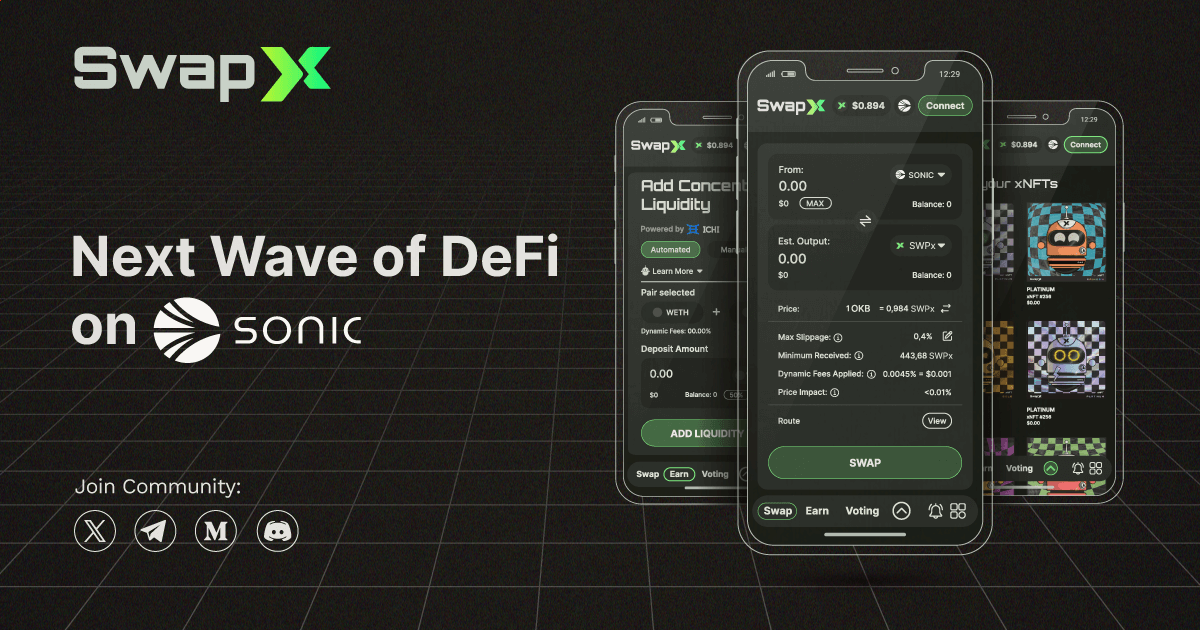
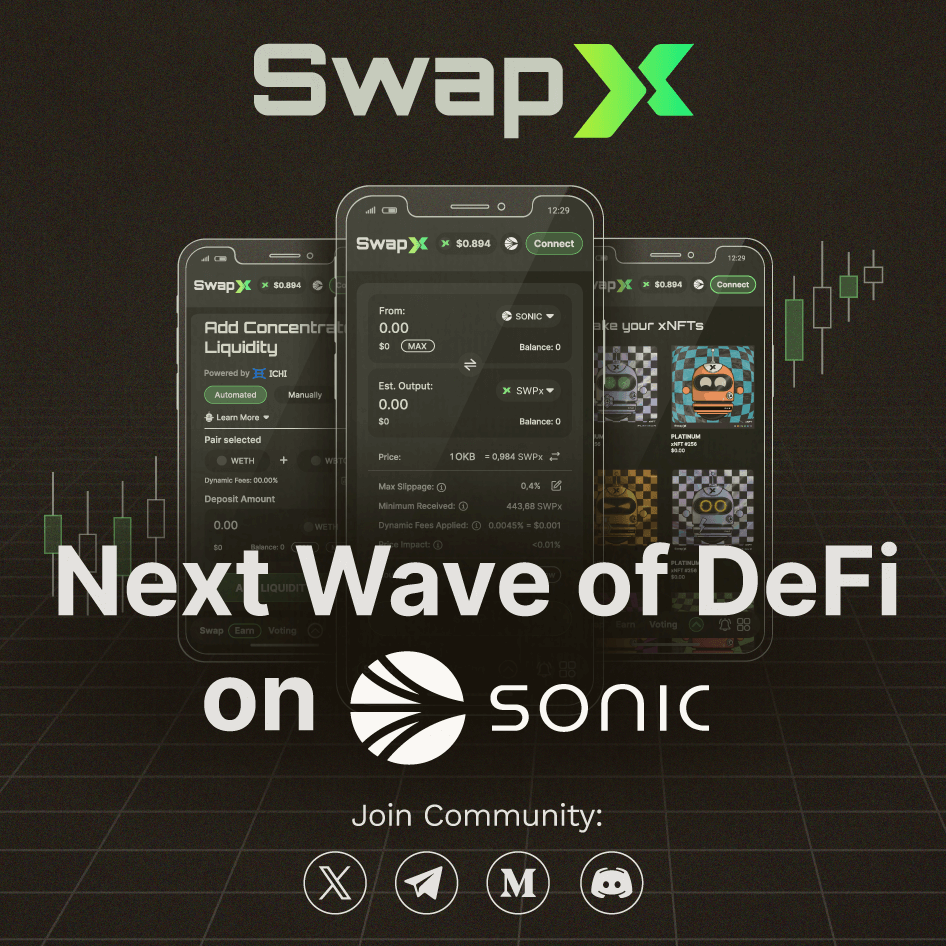
A token swap starts with a connected wallet on the Sonic network. The user chooses an input token, an output token, an amount, and a slippage limit, then the interface quotes the expected return from available pools. Once the transaction is signed, the trade settles on-chain, which means the wallet keeps custody of assets until the user approves and confirms the transaction.
The AMM pool supplies the counterparty. Prices shift according to liquidity depth, current pool composition, and the range where liquidity has been placed. A deeper pool near the current market price produces a tighter quote. A thin pool or a pair with fast price movement creates wider execution risk, so the quote preview and minimum received field matter before confirmation.
Algebra V4 concentration gives pools a working price band
Algebra Finance V4 is the mechanism behind the concentrated liquidity design described by the project. Concentrated liquidity is different from older constant-product pools that spread funds across every possible price. A provider chooses a price interval, and capital inside that interval supports trades more intensely. The same deposit works harder near the active market, which improves execution when enough providers choose useful ranges.
This design rewards precision. A narrow range earns from activity inside that band, while a wider range stays active across more price movement with less fee density. Automated liquidity management reduces some of the manual burden by adjusting strategy around pool conditions, although the underlying exposure remains tied to the tokens supplied and the market path between them.
Pool voting turns liquidity into a governance-style workflow
The voting layer gives Swapx a second job beyond swaps. Participants direct attention and rewards toward pools, and selected pools receive stronger incentive weight. That structure matters on a young chain because liquidity does not spread evenly by accident. Voting helps active markets attract depth, while reward payments give participants a reason to evaluate which pairs deserve more flow.
Pool voting also changes how a liquidity provider thinks about yield. Fees come from trades, incentives come from the voting design, and both depend on real demand for the pair. A pool with heavy rewards and weak volume has a different profile from a pool with steady swaps and modest incentives. The useful comparison is total exposure, not the reward label alone.
Adding liquidity means choosing the pair, range, and exposure
On Swapx, a liquidity position starts with a token pair. A stable pair asks different questions from a volatile pair such as a governance token against Sonic's native gas asset. Stable pairs center on tight ranges and volume, while volatile pairs bring larger price movement and more impermanent loss pressure. The provider is choosing both a market and a strategy.
A practical setup reviews four inputs before funds enter a pool:
- The two tokens in the pair and the role each token plays in the Sonic ecosystem.
- The active price range where the deposit earns fees.
- The pool's recent depth, volume, and visible reward incentives.
- The wallet approvals required before the liquidity transaction is signed.
- The exit path if one side of the pair becomes the dominant asset in the position.
Once the position is live, earnings accrue from the rules of the pool rather than from a fixed schedule. A range that falls outside the active market stops earning trading fees until price returns or the provider adjusts the position.
Trading costs show up as pool fees, price impact, and gas
A trader sees more than one cost line before confirming. The pool fee is the AMM charge paid through the swap. Price impact is the difference between the quoted market price and the executed pool price for the chosen trade size. Network gas is paid on Sonic to process the transaction. Swapx still exposes the most important number in the preview: the minimum amount received after slippage settings are applied.
Small trades in deep pools feel close to the quoted rate. Larger trades consume more of the available range, so the execution price moves. This is where concentrated liquidity proves useful: when capital sits close to the active price, a pool handles meaningful order flow with less slippage than a shallow pool using the same total deposits spread too broadly.
A first wallet session on Sonic
A first Swapx session begins with a wallet that supports Sonic and holds enough gas for approvals and swaps. The user connects the wallet, confirms that the network is Sonic, and checks that the visible token contract matches the intended asset. After that, the path is straightforward: choose tokens, inspect the quote, set slippage, approve the input token when required, and sign the swap.
Liquidity provision adds a second transaction path. The user selects the pool, deposits both sides or follows the interface instructions for the position, and confirms the range or managed strategy. Exiting later requires withdrawing liquidity and claiming any available fees or rewards through the same wallet that owns the position.
When Uniswap V3, Curve, or an aggregator is the cleaner fit
The choice is not about declaring Swapx superior to every venue. It is the Sonic-native option for users who want pool voting, Algebra V4-style concentrated liquidity, and direct exposure to Sonic ecosystem pairs. Uniswap V3 remains the reference design for concentrated liquidity across major EVM networks. Curve specializes in stable and pegged-asset swaps where its pool design fits tight pricing. Aggregators such as 1inch or Odos search across multiple venues when route quality matters more than using one exchange interface.
A Sonic user who already holds assets on the chain avoids extra bridging steps by trading where the liquidity exists locally. A user comparing execution across chains looks at bridge cost, route depth, token availability, and settlement friction before choosing a venue.
The main risks sit in ranges, contracts, and market depth
Concentrated liquidity introduces range risk. If price leaves the selected band, the position stops earning trading fees and becomes weighted toward one side of the pair. Impermanent loss becomes real when the withdrawn value trails a simple hold of the original tokens. Reward incentives soften that outcome only when fees and rewards exceed the movement against the position.
Smart contract risk also belongs in the analysis because swaps, positions, approvals, and reward claims rely on deployed code. Thin liquidity adds a separate trading risk: a pool with limited depth produces poor fills for larger swaps. The strongest users treat the interface as an execution venue and the pool page as market data, reading both before they sign.
Where this DEX fits in the Sonic DeFi stack
Sonic needs liquid markets for new tokens, stable assets, governance assets, and ecosystem pairs. A DEX with concentrated liquidity gives those markets a pricing layer. Pool voting adds a coordination layer, because incentives point liquidity toward pairs that communities and participants consider important. That combination makes the exchange part trading venue, part liquidity marketplace, and part reward routing system.
Its best use cases are direct Sonic token swaps, active liquidity strategies, and participation in pool incentives. The exchange suits users who understand wallet approvals, AMM pricing, and the tradeoff between earning fees and holding directional token exposure. For simple one-time swaps, the quote screen carries most of the decision. For liquidity providers, the pool design, range selection, and reward mechanics deserve the deeper read.
What to know about Swapx
Fees on Swapx: what should a trader budget for?
A trader budgets for the pool fee, price impact, and Sonic network gas. The pool fee is built into the swap route, price impact changes with order size and available liquidity, and gas is paid by the wallet to submit the transaction. The minimum received field is the key protection because it shows the worst accepted output after the chosen slippage setting.
Which wallet network settings do I need for this DEX?
You need a wallet configured for the Sonic blockchain and enough native gas to pay for approvals, swaps, liquidity deposits, and claims. The interface works through wallet signatures, so the active network in the wallet should match Sonic before any transaction is approved. Token contract checks matter when several assets share similar names or symbols.
Does providing liquidity require active range management?
Concentrated liquidity rewards active management because a position earns trading fees only while price remains inside its selected range. Automated liquidity management helps organize the strategy, but the provider still owns exposure to both assets in the pair. Wider ranges reduce adjustment pressure, while narrower ranges concentrate capital around the active price and demand closer monitoring.
Can pool voters lose money while earning rewards?
Yes. Voting rewards are separate from the market value of wallet holdings and liquidity positions. A participant gains rewards from the voting system, but token prices, pool exposure, and transaction costs still affect the final outcome. The clearest review combines claimed rewards, unclaimed rewards, gas spent, and the current value of any related liquidity position.
What happens if my liquidity range goes out of price?
When the market price moves outside a selected range, the position stops earning trading fees until price returns or the range is changed. The position also becomes concentrated in one of the two assets in the pair. Withdrawing at that point gives the provider the current token mix rather than the original balanced deposit.
How long does a Sonic swap take to settle?
A swap settles after the signed transaction confirms on the Sonic network. The exact wait reflects live block production, wallet gas settings, and network load at the time of submission. The interface shows transaction status while the wallet and chain process it. Once confirmed, the output token balance updates in the same wallet that submitted the trade.