Tips and walkthroughs
Swapx is a Sonic liquidity venue built around Algebra V4 pools
In short: Decentralized exchange on Sonic for low-slippage token swaps, using Algebra V4 concentrated liquidity pools to support automated LP management.
Swapx is an Algebra Finance V4 liquidity venue on Sonic where concentrated pools route token swaps, organize liquidity into active price ranges, and connect LP positions with automated management and pool voting rewards. The narrower reason users search for it is yield: the exchange gives liquidity providers a way to place capital into Sonic trading pairs, earn from swap activity, and participate in pool-level incentives without treating every token pair as a simple passive deposit.
Algebra V4 pools shape the yield story
The important detail is the pool engine. Algebra Finance V4 uses concentrated liquidity, which means liquidity sits inside price bands instead of being spread evenly across every possible market price. When trades happen inside a provider's active range, that capital is doing useful work for the pool and earns its share of trading fees . A wide range behaves closer to traditional AMM liquidity; a tighter range concentrates capital around the current market and gives the pool deeper execution near that price.
For a DEX on Sonic, that design matters because traders care about low slippage and LPs care about capital efficiency. Swapx builds around that relationship. Stronger liquidity near the current price improves routes for swaps, while active LP positions receive exposure to the fee flow from those swaps. The same mechanism also makes position management more important than it is in a basic constant-product pool.
The Sonic chain changes the trading rhythm
Sonic is the execution layer underneath the exchange, so wallet connections, token balances, gas payments, confirmations, and pool interactions all happen in that ecosystem. Faster settlement and lower transaction friction make active liquidity management more practical, especially when users adjust ranges, claim earnings, vote, or rebalance positions. A pool strategy that feels too expensive on a congested network becomes easier to maintain when routine transactions settle with less overhead.
That does not turn LPing into a set-and-forget action. Concentrated liquidity rewards attention. If the market price moves outside the selected range, the position no longer supplies active liquidity to trades in that pool. It still represents the deposited assets, but fee accrual resumes only when the price moves back into range or the user adjusts the position.
Where automated liquidity management fits
Automated liquidity management is the bridge between concentrated liquidity and everyday use. Instead of expecting every LP to keep selecting new ranges manually, the exchange highlights a model where management logic helps keep capital aligned with active trading zones. This is especially useful for users who understand the pair they want exposure to but do not want to treat every price move as a manual maintenance task.
On Swapx, this angle complements the Algebra V4 pool design rather than replacing it. The core economics still come from swaps, liquidity depth, token exposure, and pool incentives. Automation helps with execution discipline: ranges, redeployment, and pool-specific settings become part of the product experience rather than a spreadsheet exercise performed outside the app.
How pool voting connects liquidity to rewards
The official positioning includes a second yield-related action: users get paid to vote for pools. That introduces a governance-style layer around where incentives flow. Voting gives liquidity communities a way to direct attention toward specific pairs, while traders benefit when incentives draw deeper liquidity into markets they actually use.
This is a different activity from swapping or depositing liquidity. A trader arrives to exchange one Sonic ecosystem token for another. An LP deposits assets into a pool and takes on market exposure. A voter focuses on pool selection and incentive direction. Swapx brings those roles into one DEX interface, which is why the yield page angle is broader than fees alone.
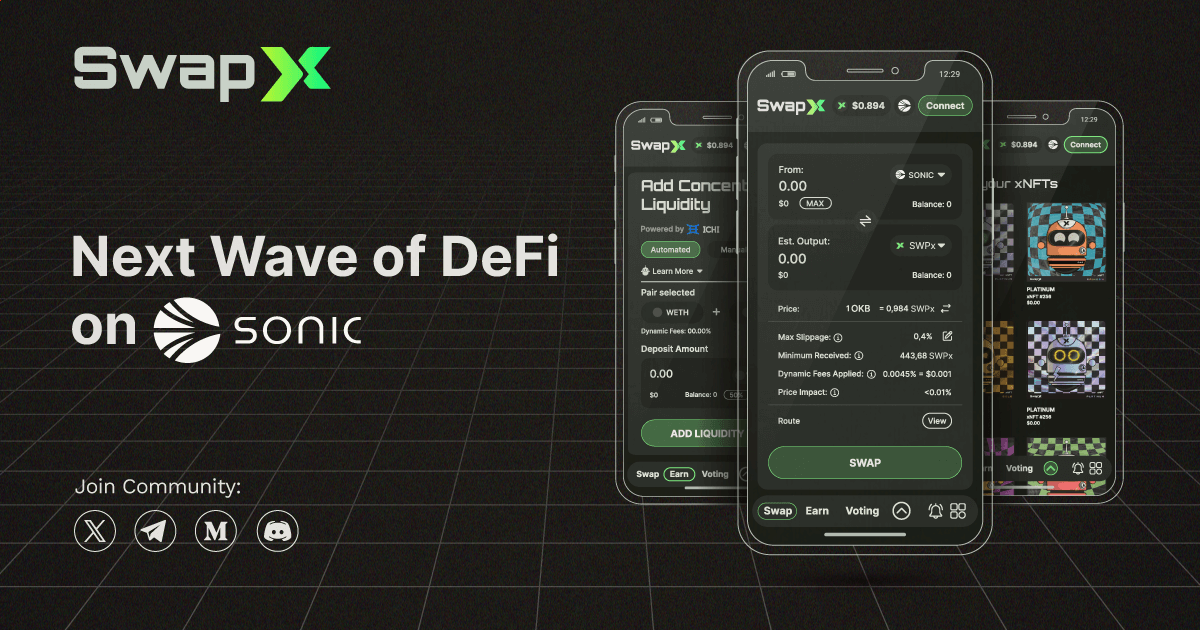
Choosing a pool before adding capital
Pool selection starts with the pair, not the displayed reward. A volatile pair creates different LP outcomes than a stable or tightly correlated pair because price movement changes the token mix inside the position. If one asset rises strongly against the other, the LP position gradually shifts toward the weaker side of the pair. That is the tradeoff behind fee income in AMM liquidity.
A useful pre-deposit review looks at five concrete items:
- the two tokens in the pair and whether both fit the user's intended exposure;
- recent trading activity, because fees require real swap volume;
- the current price range and how narrow the active band is;
- available pool incentives or voting rewards tied to that market;
- the cost and effort of adjusting the position when market conditions move.
Swapx makes the pool the main decision point. The app experience is about matching capital to the right market, then deciding how actively that position deserves to be managed.
A first liquidity workflow on Sonic
A new LP starts by using a Sonic-compatible wallet, holding the tokens needed for the chosen pair, and keeping enough gas for transactions. After opening the exchange, the user selects the liquidity area, reviews available pools, and chooses a pair that matches their asset exposure. The position then requires token amounts, range settings, and transaction approval from the wallet.
Once the deposit transaction confirms, the position begins participating according to its active range. Earnings do not arrive as a fixed interest rate; they come from the mechanics of the pool, including trading fees and any incentive structure attached to that market. On Swapx, the more advanced parts of the workflow appear after the first deposit: monitoring range status, claiming rewards, voting for pools, and deciding when automation fits the position.
Low-slippage swaps depend on concentrated depth
The trader-facing benefit of this design is execution quality. Low slippage means the quoted price and final executed price stay close, especially for meaningful trade sizes. Concentrated liquidity improves that outcome when LP capital is gathered around the price where trades actually clear. In that setting, each unit of liquidity has more impact than it would if spread across a very broad price curve.
This is where the LP and trader sides reinforce each other. Traders route through pools that settle swaps efficiently. Their activity generates fee flow. LPs respond to that activity by keeping liquidity in competitive ranges. Swapx uses Algebra V4 to make this loop more precise than a flat, all-range AMM model.
Risks tied to range, token exposure, and incentives
The main risk is position behavior during price movement. Concentrated liquidity changes the mix of assets in a position as the market moves, and a range that looked attractive at entry becomes inactive after a decisive move. That creates a practical maintenance burden and exposes the LP to impermanent loss, especially in volatile token pairs.
Incentives deserve separate attention. Rewards strengthen a pool's appeal, but they do not erase poor pair selection, thin swap volume, or unwanted token exposure. A pool with high displayed rewards and weak organic trading activity creates a different profile from a pool with steady volume and moderate incentives. The best reading of Swapx yield comes from combining fee potential, range behavior, and reward mechanics into one view.
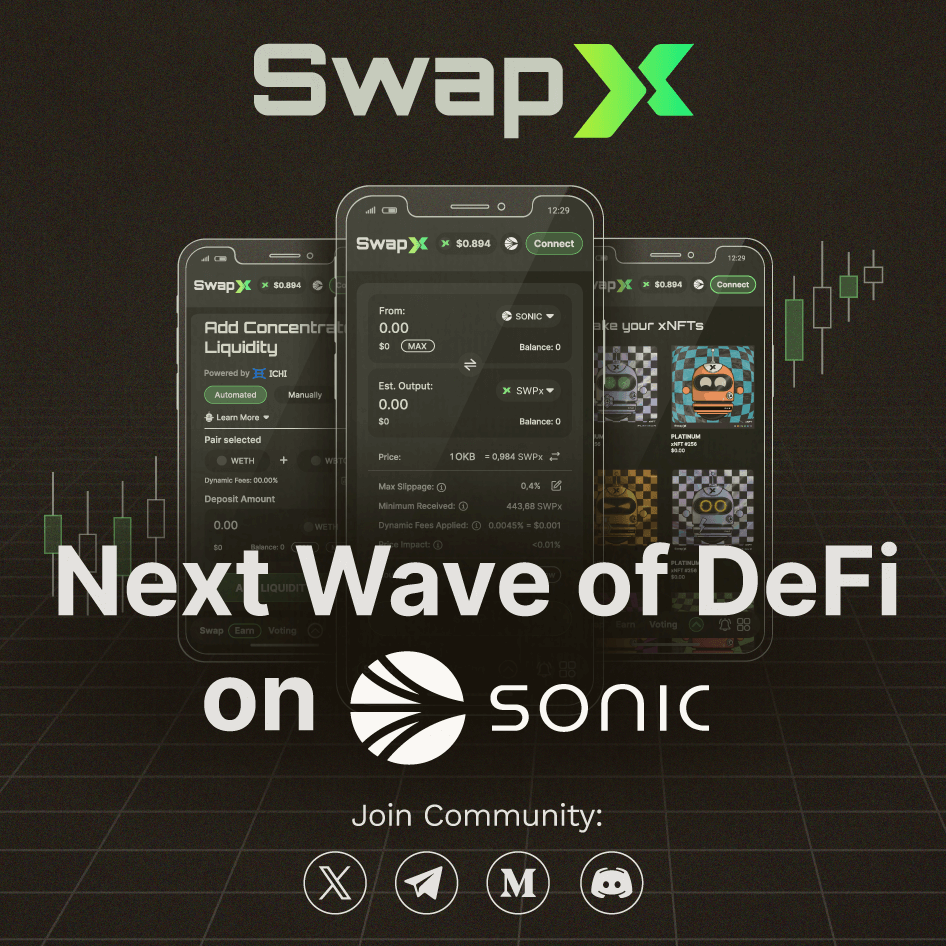
Alternatives inside the DEX toolkit
Users who want simple spot execution compare this kind of Sonic DEX experience with aggregators, broad AMMs, and centralized exchanges. Aggregators search across routes and liquidity sources. Traditional AMMs offer simpler pool behavior with less range management. Centralized venues remove wallet transaction steps but replace on-chain custody and pool transparency with account-based trading.
The Swapx angle is strongest when a user wants on-chain Sonic swaps, concentrated liquidity exposure, and pool incentives in the same setting. It is less suited to someone who only wants to hold a token without managing any position. The exchange is most interesting when the user is willing to think like a liquidity provider: choose the pair, understand the range, monitor the pool, and use the reward layer deliberately.
Swapx questions worth asking
What tokens do I need before adding liquidity on Swapx?
You need both assets for the specific pool you choose, plus enough Sonic gas to approve and submit transactions. If the pair is made of two volatile tokens, the position changes as prices move. If the pair is more closely correlated, the range behaves differently. The required assets are set by the pool, so preparation starts with choosing the exact market rather than holding one generic token.
Does an Algebra V4 position keep earning when price leaves the range?
A concentrated liquidity position earns trading fees only while its liquidity is active around the current market price. When price moves outside the selected range, the position stops serving trades in that pool until the market returns or the range is adjusted. The deposited value still exists as a position, but its earning behavior changes because it is no longer supplying liquidity where swaps clear.
Fees on Swapx pools come from which activity?
Pool fees come from token swaps routed through the liquidity pool. Traders pay the swap cost as part of execution, and active liquidity providers receive their share according to the pool mechanics and their position. Extra incentives or voting rewards are separate from ordinary trading fees, so a yield estimate should distinguish between organic swap activity and program-based rewards attached to a pool.
Can I use Swapx only for swaps without providing liquidity?
Yes. A trader uses the exchange to route token swaps on Sonic without becoming an LP. Liquidity provision is a separate action that deposits two assets into a pool and creates exposure to fees, incentives, and price-range behavior. Swapping is the simpler workflow: connect a wallet, choose the input and output tokens, review the quote, and confirm the transaction.
Why would an LP choose a narrow range instead of a wide one?
A narrow range concentrates more capital near the current price, which improves capital efficiency while the market stays inside that band. The tradeoff is maintenance: a strong price move pushes the position out of range sooner. A wide range gives more room for price movement but spreads liquidity across a larger interval, so less capital sits exactly where trades are clearing.